|
More Specifically
Pre-Production
During pre-production the scripty becomes familiar with the script, Then, the scripty figures out things about the script like timelines and chronology, the props needed for each scene, what the wardrobe, hair, and make up will be for each scene, the basic lighting and sound flow of the script, and the number of scenes and how long each should be in the finished film. The script supervisor knows what should be filmed, what wild tracks will need to be taken, and just about everything about the actual filming of the project.
Production
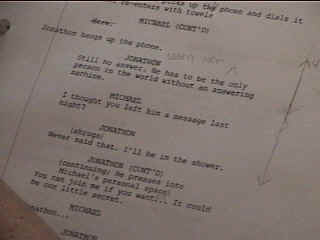
During production the script supervisor takes notes on what happens during each take and lets the director
know if there are continuity problems in involving props, dialogue, locations, lighting, sound, wardrobe, hair, make up, etc. The script sup. also times each scene and records everything from number of takes to the sound roll used.
Post-Production
In post-production the script supervisor has no direct role, but the reports generated and the notes taken by the scripty are integral to the work of the editor. Without the script supervisor, the editor would have to watch all of the footage taken for a film to find out where scenes are and then decide which footage will make the cut. With a good script supervisor, the editor can pinpoint where footage can be found and can easily determine which footage the director liked best as well as what footage will fit well together.
For More Information
There are a few good books on the subject of script
supervision. The most
basic and understandable as a starting selection is Pat Miller's Script
Supervising and Film Continuity.
Drop Me a Line |